Mounted overhead, connected to a network of pipes and nozzles, the full-room fire suppression system stands as the visible symbol of fire safety investment. It is inspected, certified, and insured against thermal oil fire risk. It gives plant managers confidence and satisfies compliance requirements. And yet, thermal oil fires still happen. Equipment is still damaged. Production lines are still lost for days, sometimes weeks, at a time. The reason is not that full-room fire suppression systems don’t work. They do, under the right conditions, at the right moment. The problem is far more fundamental: a system designed to respond to a fire cannot prevent one.
In thermal oil operations, where mechanical seal failure in thermal fluid pumps is the single most common ignition source, relying on room-level suppression as your primary line of defense leaves a dangerous gap between where fires start and where your protection actually begins.
This article examines the real limitations of full-room fire suppression in thermal oil and heat transfer fluid systems — and why the plants that understand this distinction are operating more safely, with less downtime, and lower total risk.
Full-room fire suppression systems, whether foam deluge, CO₂, or dry chemical, are engineered to a specific purpose: limit the spread of a fire once it has already started.
They are triggered by heat detectors, smoke sensors, or manual activation. When conditions exceed a set threshold, suppressant is released across the affected zone, suppressing combustion and preventing the fire from spreading to adjacent equipment, structures, or personnel. This is critical capability and no one disputes it.
By the time a full-room system activates several events have already unfolded in sequence:
At that point, suppression is no longer prevention. It is damage control.
Thermal oil fires don’t begin in the middle of a pump room. They begin at one specific location: the mechanical seal of a thermal fluid circulation pump.
This is well-established in industry practice and consistent with NFPA 87 guidance for thermal fluid heaters. The pump seal is under continuous mechanical and thermal stress: elevated operating temperatures, constant friction at the seal face, pressure fluctuations during startups and shutdowns, and the gradual wear of continuous duty cycles.
When a seal degrades, it leaks. When hot thermal oil leaks and contacts oxygen near rotating equipment, hot surfaces, or other ignition sources, ignition follows. This entire sequence, from the first micro-leak to the moment of ignition, can unfold in minutes. And it unfolds entirely below the activation threshold of most room-level fire detection systems.
Room suppression systems are not instrumented to detect a rising seal temperature. They cannot sense a vibration anomaly in a bearing housing. They have no mechanism to identify micro-leakage at the seal face before it escalates into a heat transfer fluid fire. They are, by design, blind to the early stages of the very failure that leads to ignition.
For more on how this escalation unfolds: What Happens If You Ignore Pump Seal Failures in Thermal Oil Systems?
When a full-room suppression system activates the immediate priority is personnel safety. But the moments that follow carry a cascade of operational and financial consequences that are rarely factored into fire risk planning, or capital budget decisions.
A full-room discharge does not simply extinguish a thermal oil fire and allow operations to resume. Everything in the affected zone stops. Equipment must be inspected before restart. The ignition source, typically the failed pump seal, must be investigated and documented. Regulatory notifications may be required depending on jurisdiction.
In continuous-process operations: engineered wood manufacturing, chemical processing, food production, industrial materials; this translates to hours, days, or in severe cases, weeks of lost production. In high-throughput plants, unplanned downtime costs can reach tens of thousands of dollars per hour.
Foam-based fire suppression systems are highly effective at suppressing flammable liquid fires. They are also extraordinarily disruptive to clean up. After a foam deluge discharge, suppressant penetrates equipment, electrical panels, insulation, flooring, and instrumentation throughout the pump room. Cleanup is labor-intensive, time-consuming, and frequently causes secondary damage to equipment that was never directly exposed to the thermal oil fire.
In many documented incidents, foam cleanup costs have exceeded the direct cost of the fire damage itself.
After activation, the suppression system must be fully recharged and re-inspected before the facility is considered compliant. Depending on system size, suppressant type, and contractor availability, recharge costs alone can run into tens of thousands of dollars — with lead times that extend the window of reduced protection.
Thermal oil fires that reach the trigger threshold of a room suppression system have often already caused significant damage at the pump itself — to the pump casing, mechanical seal housing, piping connections, instrumentation, and adjacent equipment. The suppression system may stop the fire, but it cannot reverse the damage that occurred in the minutes before activation.
A fire event, even a contained one, triggers scrutiny across multiple dimensions. Safety audits, incident investigations, OSHA reviews, insurer assessments, and potentially DSEAR (EU) or NFPA compliance reviews follow. Facilities with repeated heat transfer fluid fire incidents face premium increases, coverage modifications, or new compliance mandates that add long-term operating costs.
To understand the full financial scope of a pump seal failure event, see: The Real Cost of Pump Seal Failures in Thermal Oil Systems
Many thermal oil plant operators work under the assumption that meeting fire code requirements constitutes adequate fire protection. In most industrial settings, this is a reasonable framework. In thermal fluid systems, it falls short. Fire codes establish minimum standards. They require suppression capability. They do not mandate prevention at the ignition source, i.e., the pump seal.
A facility can be fully code-compliant; properly inspected and certified to applicable standards and still have zero protection against the most likely cause of fire in its thermal oil pump room.
Full-room suppression satisfies the compliance checklist. It does not close the gap at the seal. Regulatory standards reflect what is required, not necessarily what is sufficient in high-risk thermal fluid environments.
In a thermal oil system, the interval between the onset of seal degradation and the moment of ignition is a window of opportunity for intervention, but only if it is monitored. Without pump-level protection and monitoring, that window closes silently.
Each stage represents a missed opportunity for intervention. By the time the room system responds, the heat transfer fluid fire has already run its full course.
The difference is not just in outcomes. It is in the entire cost, safety, and downtime profile of the incident.
This article is not an argument against full-room fire suppression systems. They remain an essential component of any thermal oil plant’s fire protection strategy, the last line of defense when all other measures have been exhausted.
The argument is for layered protection: recognizing that room-level suppression and pump-level protection serve fundamentally different functions, and that one without the other leaves a critical gap in thermal fluid system safety.
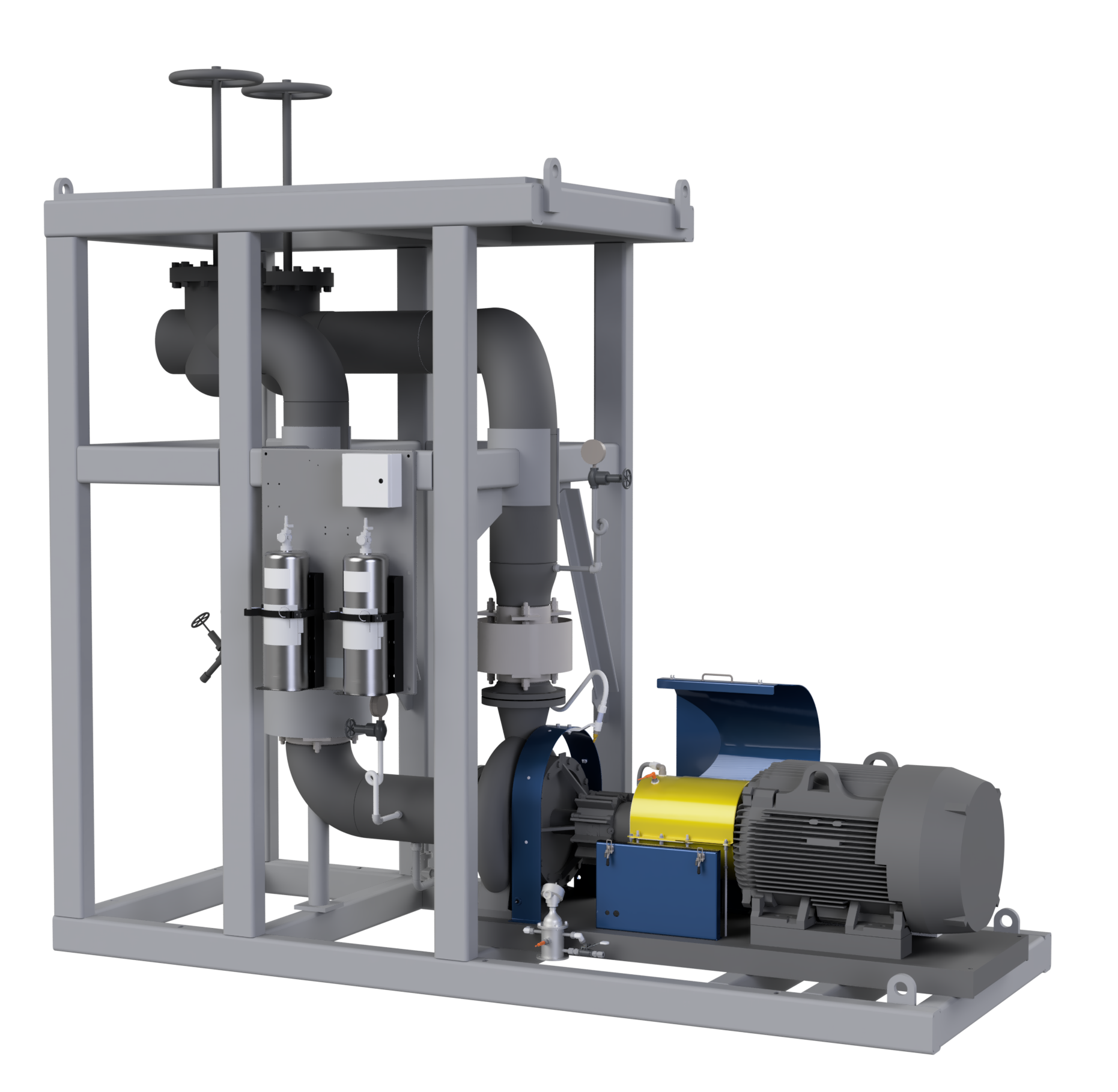
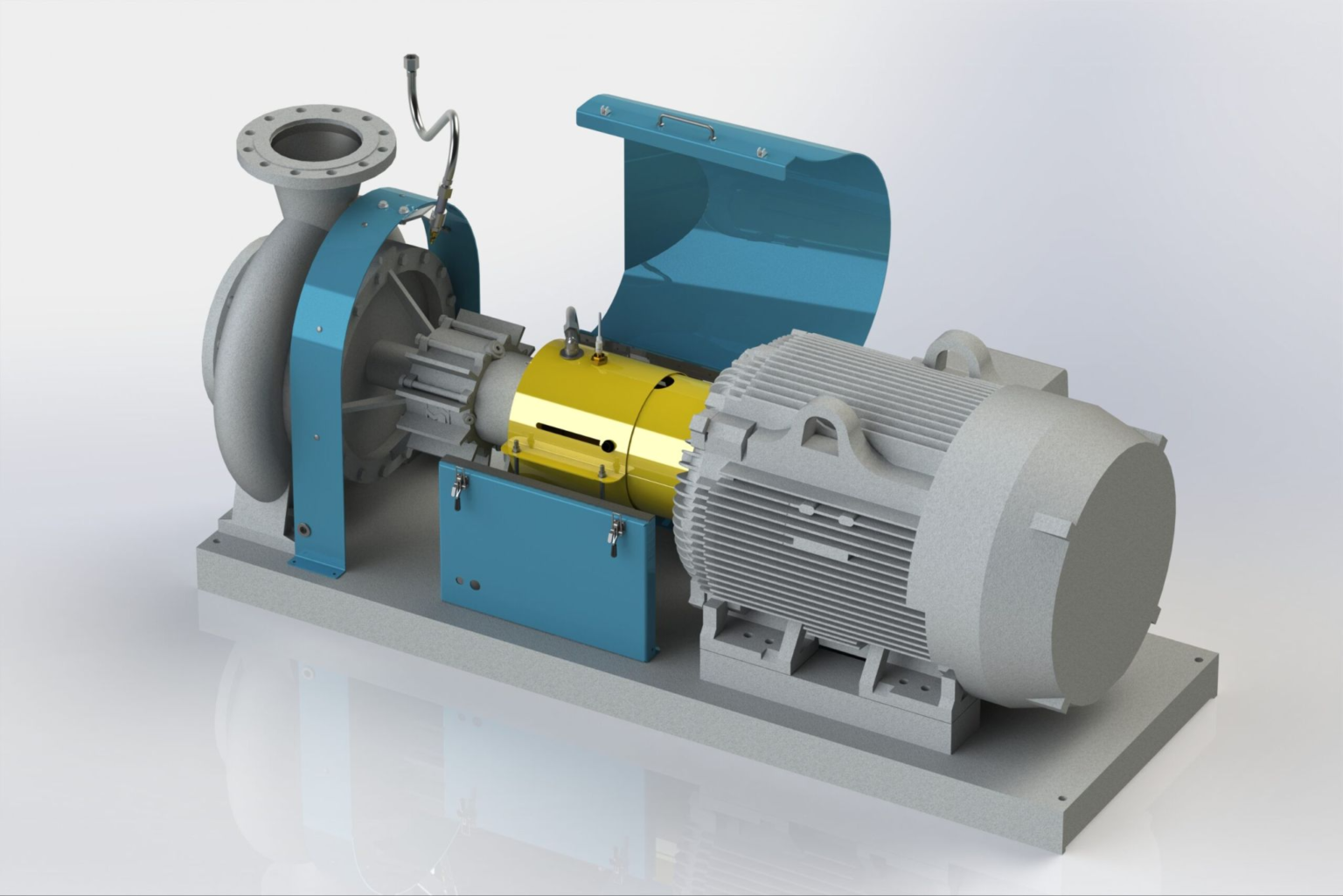
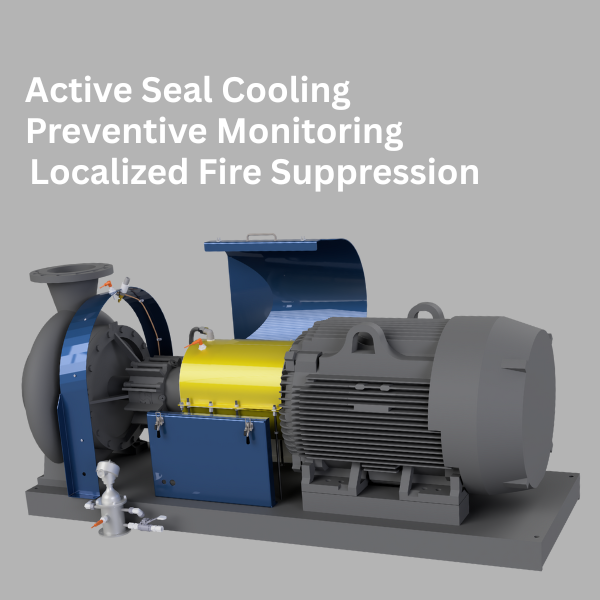
Full-room suppression handles the scenario where a thermal oil fire has already ignited and must be contained. Pump-level protection, through active seal cooling, continuous condition monitoring, and localized fire suppression, addresses the scenario where failure is developing and prevention is still possible.
Together, they create a complete thermal oil fire protection architecture. Separately, room-level suppression alone means that every pump fire in your facility will run its full course before any protective response begins.
“We chose PumpGuard because it’s a complete, robust system linked to our PLCs. It detects issues early, preventing damage, rather than just reacting after problems arise.” — Alexandre Ouellette, Plant Manager, Roseburg Forest Products
If your thermal oil system currently depends on a full-room foam deluge or deluge suppression system as its primary pump protection, it’s worth evaluating what happens in the time between seal degradation and room-level detection.
Wechsler Technologies offers pump-level risk assessments for thermal oil plants across North America and Europe. Our team evaluates your current fire protection architecture and identifies the gaps that room systems alone cannot address.
Download the PumpGuard System Datasheet – technical specifications, system configurations, and integration options.
Full-room fire suppression systems are an important investment in thermal oil plant safety. They are also, by design, the last line of defense; deployed after a thermal oil fire has already started, after the mechanical seal has already failed, after the heat transfer fluid has already ignited.
In thermal fluid systems, where pump seal failures are the leading cause of process heating fires, this means the most consequential protection gap occurs in the stages before a room system ever activates.
The plants that have moved beyond reactive suppression, adding pump-level seal cooling, condition monitoring, and localized fire suppression, are not replacing their room systems. They are filling the gap that room systems were never designed to cover.
Prevention and suppression are not competing strategies. But in thermal oil operations, prevention has to come first.
Why Thermal Fluid Pump Reliability Depends on Active Seal Cooling